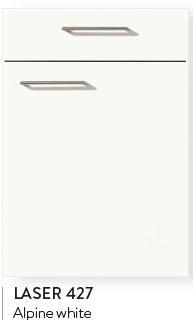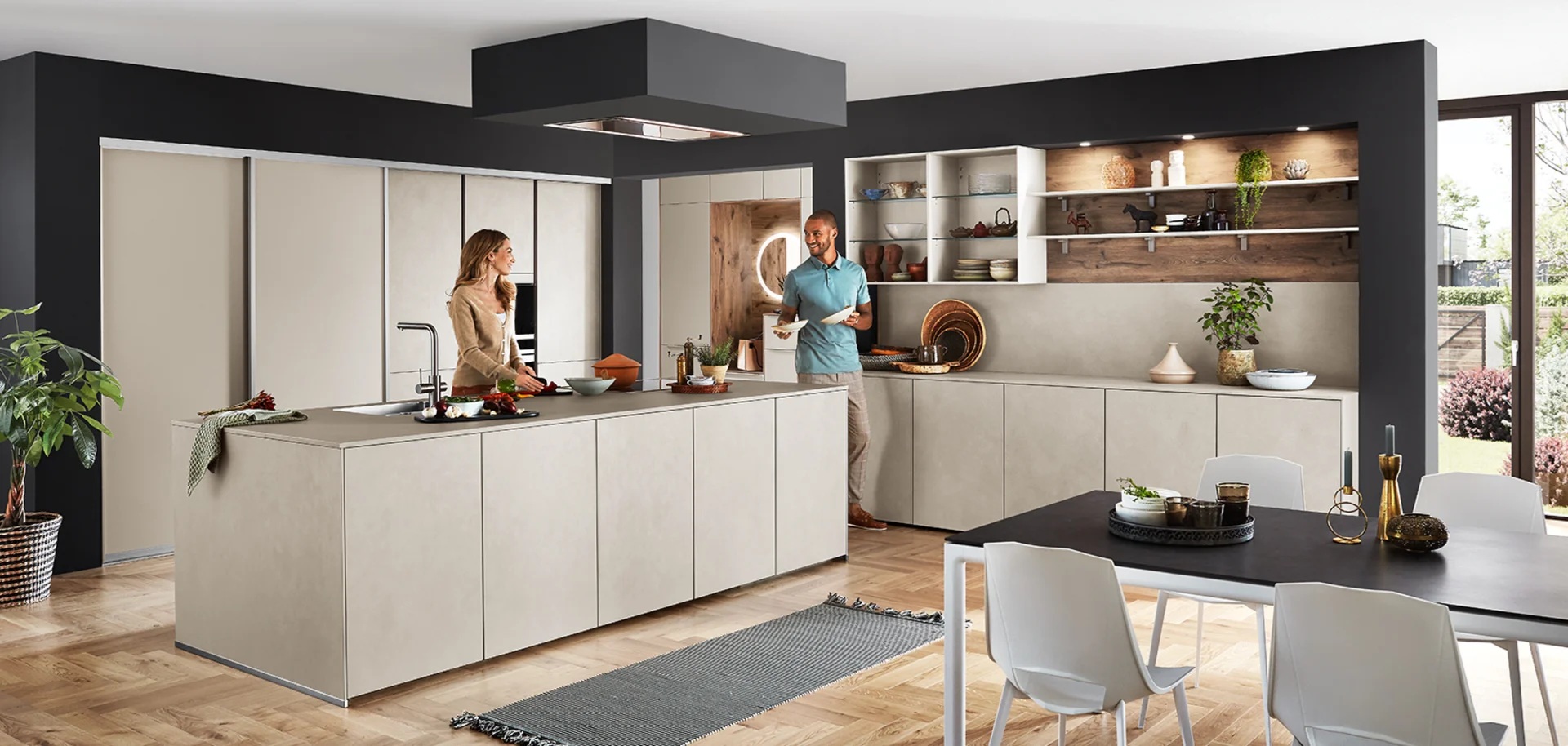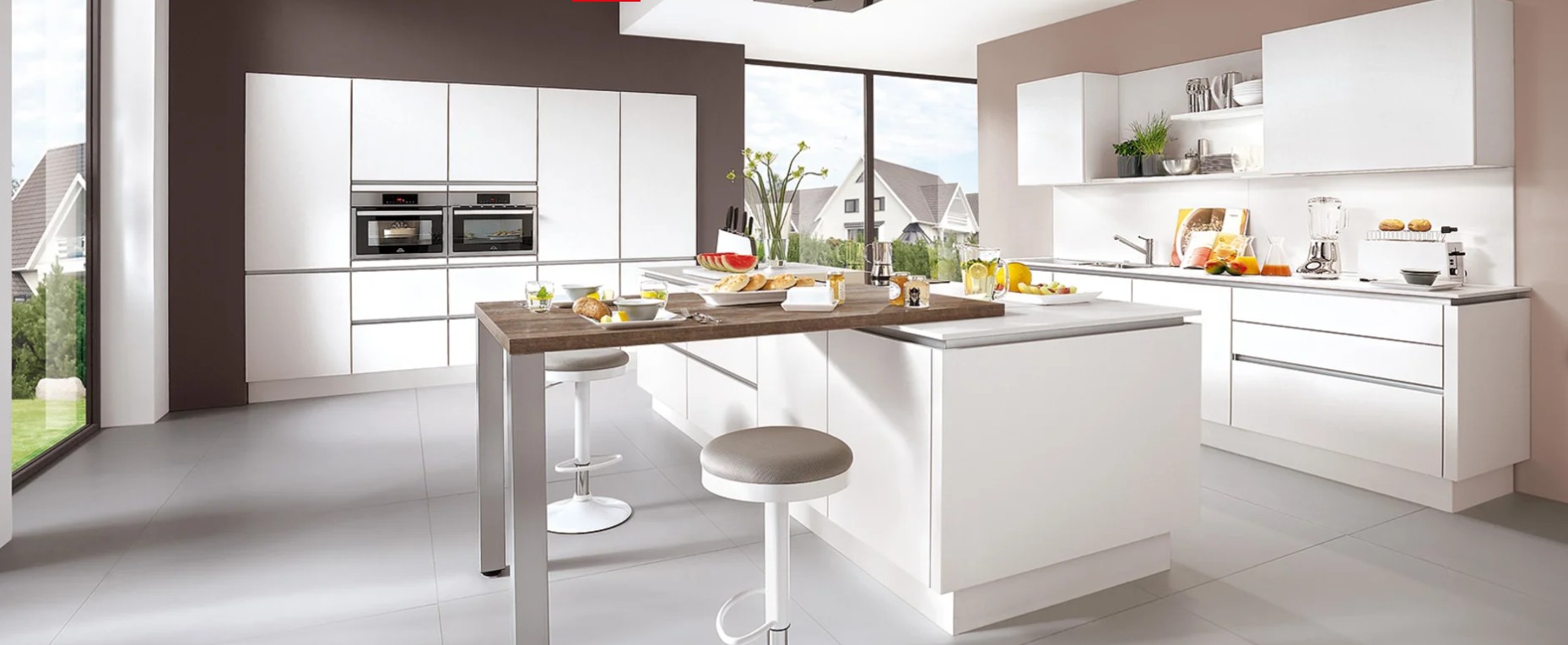
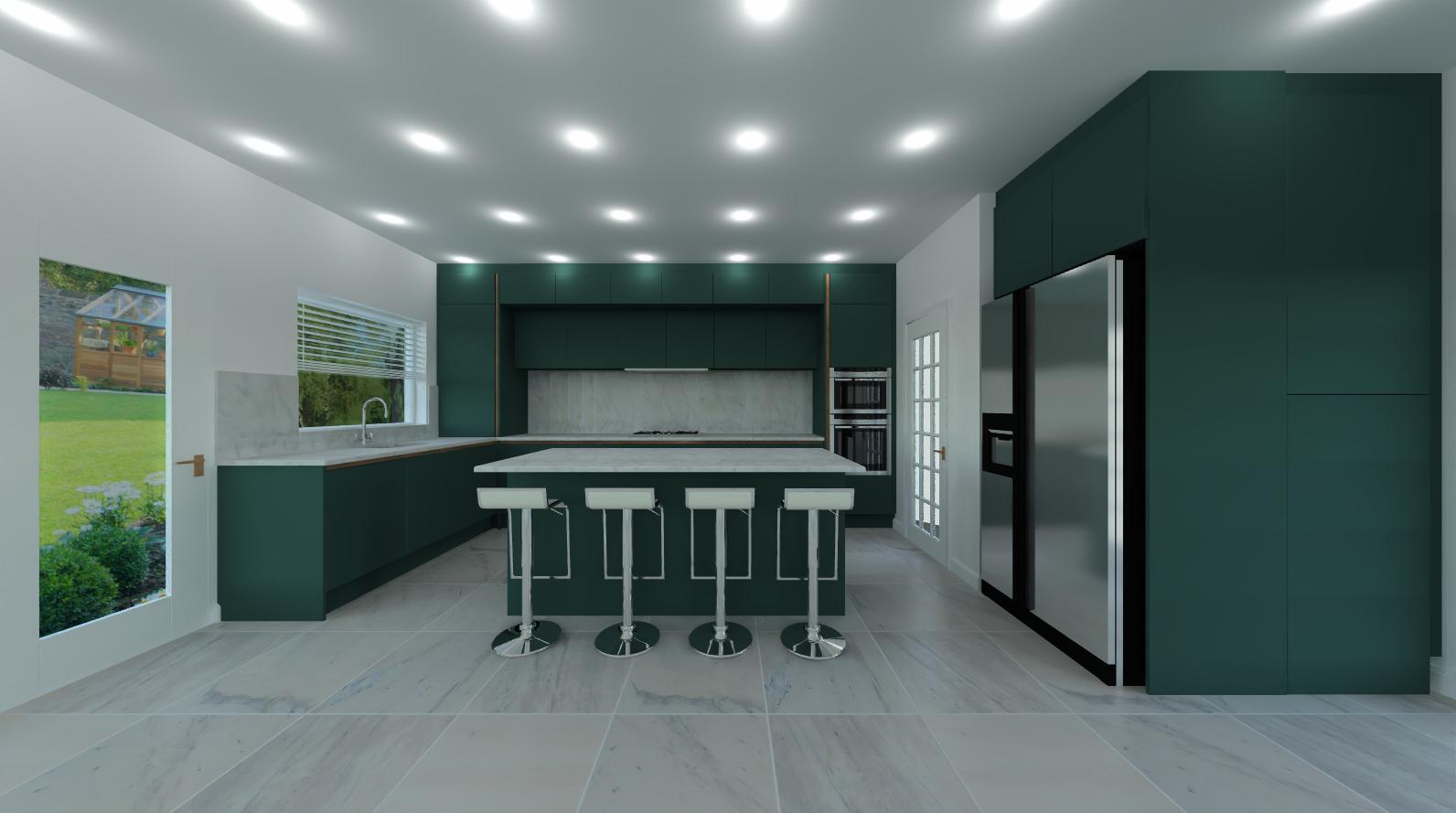
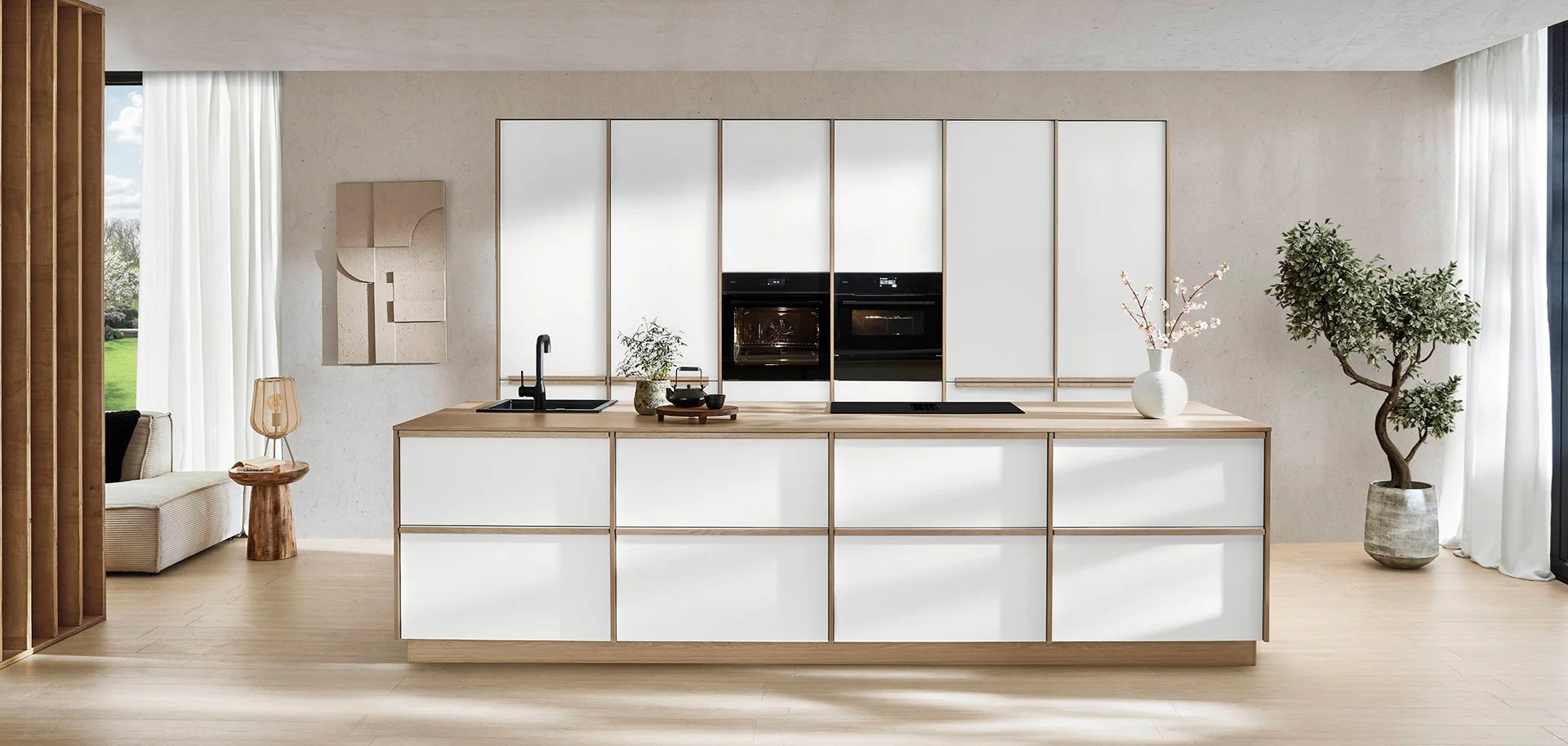
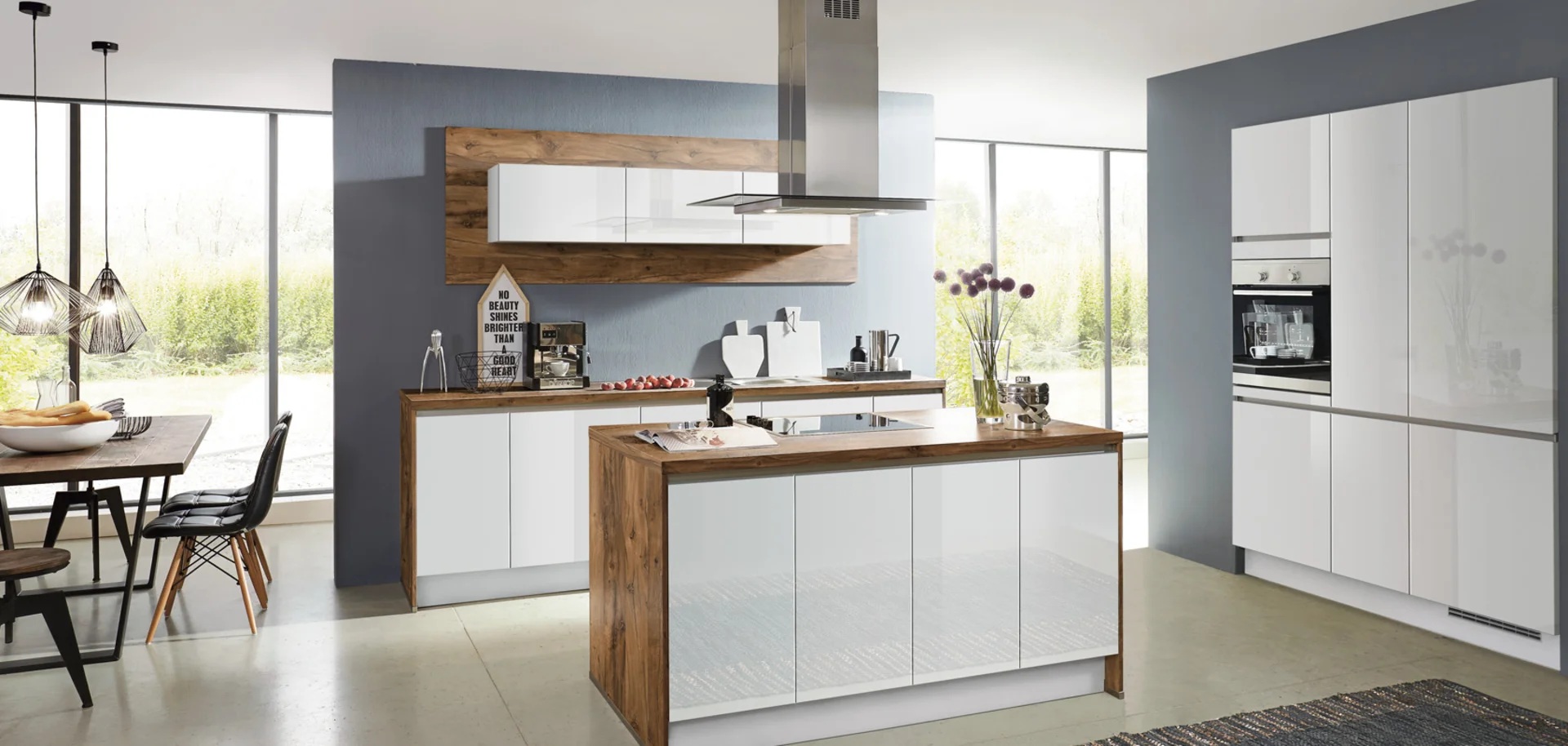
There is a specific kind of architectural calm that a true handleless kitchen creates. No hardware catching the light, no visual interruptions along a run of cabinetry—just a seamless, unbroken line from one end of the room to the other. Originally a niche, high-end specification, handleless cabinetry has evolved into the definitive look of modern luxury. At The German Kitchens, this precision-engineered style is a focal point in almost every consultation we hold for open-plan London homes, renovations, and new developments.
This comprehensive guide covers what authentic German handleless engineering actually entails, the different mechanisms available, where this style performs best, our distinct price groups, and the real-world considerations you should know before committing to a design.
In standard British kitchens, "handleless" often just means a groove routed into the top of a door (a J-pull). Authentic German handleless engineering operates on a completely different level. The opening mechanism is integrated into the structure of the kitchen itself. There are two primary approaches:
A third, ultra-luxury option is the electronic push-to-open system (like Blum SERVO-DRIVE). Wired discreetly into the cabinetry, a slight tap on the door front triggers an electric motor to smoothly glide the drawer open. This is the ultimate in seamless luxury, though it comes at a higher installation and hardware cost.
The reasons clients at our West London showroom gravitate toward this style tend to fall into a few consistent, practical categories:
While visually stunning, handleless design isn't the automatic right choice for every single household. We believe in being transparent about how it compares to traditional handled cabinetry.
| Consideration | True Handleless (Profile) | Handled Cabinetry |
|---|---|---|
| Ease of opening (wet or full hands) | Requires a hook of the fingers; push-to-open needs a precise press | Easier — a physical handle is simple to grab in any situation |
| Long-term Maintenance | Push-to-open springs may require minor recalibration over years | Minimal — handles are static and rarely require adjustment |
| Repair Complexity | Higher — damaged mechanisms or structural profiles take more time to swap | Lower — replacing a scratched handle is a simple DIY task |
| Aesthetic Impact | Sleek, architectural, uninterrupted, and ultra-modern | Adds texture, warmth, and metallic accents to the room |
| Installation Cost | Higher — requires specialized profile routing and precision fitting | Standard — included in basic cabinet installation |
For incredibly busy family kitchens where multiple people are constantly accessing cupboards with wet or messy hands, the German structural profile system is vastly superior to a push-to-open mechanism, as it doesn't require a clean touch on the door face to operate.
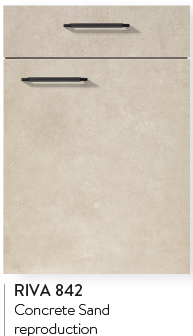
Because there is no hardware to break up the surface, the finish of the door carries immense visual weight. German manufacturers excel in advanced surface technologies.
| Finish Type | Why it works for Handleless | Our Design Notes |
|---|---|---|
| Anti-Fingerprint Ultra-Matt | Creates a soft, fabric-like light diffusion that feels incredibly premium. | Highly popular in our mid-to-high price groups; naturally resists smudges and requires very little upkeep. |
| High-Gloss Lacquer | Maximizes light reflection across the uninterrupted run of cabinetry. | Perfect for darker rooms, though it shows marks more easily and requires regular microfiber wiping. |
| Textured Woodgrain & Stone | Adds organic warmth and tactile interest to an otherwise minimalist layout. | Excellent for hiding fingerprints on base units; often paired with solid matte wall units. |
At The German Kitchens, our flexible structure ensures you can achieve this high-end aesthetic regardless of your project scope. Handleless profiles generally add a modest premium over standard cabinetry due to the extra aluminum hardware and complex manufacturing.
Installing a true German handleless kitchen requires specialized expertise. Standard carpenters often struggle with the exact tolerances needed. When our fitting teams handle an installation:
Absolutely. A highly practical and popular configuration at our showroom is pairing a handleless run of wall units with a discreet edge-pull handle on the heavy base drawers. This preserves the minimalist sightline at eye level while providing maximum ergonomic grip for the heavy pots and pans stored below.
Usually, it is much easier. Without handles, there are no awkward corners for grease to build up. If you choose an anti-fingerprint matte finish from our German ranges, daily maintenance is incredibly minimal.
Cheap mechanisms do, but German-engineered tip-on systems from brands like Hettich or Blum are tested for tens of thousands of cycles. They may need a slight tension recalibration after a few years, but they are built to last.
Yes, but we strongly recommend the true handleless profile (the structural metal channel) rather than push-to-open doors. The profile allows children to grip and open doors easily without needing the precise force required to trigger a push mechanism.
Depending on the size of the kitchen, upgrading to a true handleless profile system typically adds between £500 and £1,200 to the overall furniture cost, due to the aluminum channels and specialized cabinet construction.
We do not recommend it. The beauty of a Shaker door lies in its traditional framed aesthetics, which clash with the ultra-modern horizontal lines of a handleless profile. Handleless design is best executed with pure slab doors.
Photographs cannot convey the tactile satisfaction of opening a perfectly balanced German drawer or seeing how light interacts with a continuous handleless profile. We invite you to visit our West London showroom in Harrow to test these mechanisms yourself, explore our 10 price groups, and discuss your architectural plans with our design team.